Thomas Ptacek: Never Use a Single Word an LLM Suggests
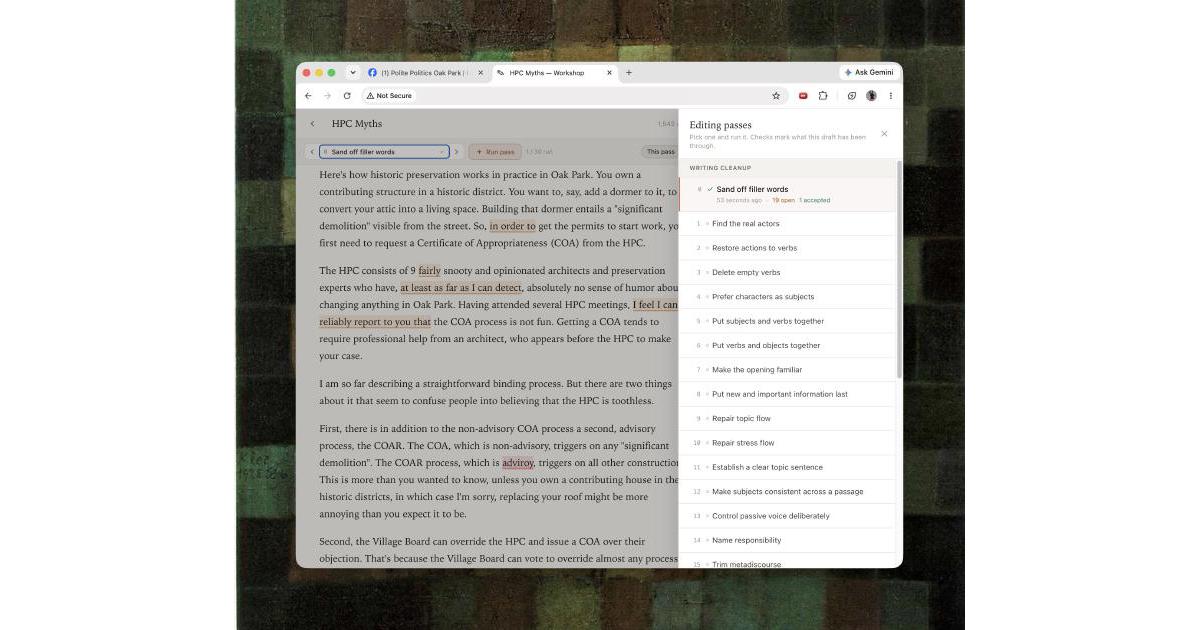
Ptacek treats LLMs as copyeditors only, banning any AI-suggested phrasing outright.
Thomas Ptacek published a discipline for working with LLMs that flips the default assumption. The tool checks facts, catches spelling errors, and acts as a thesaurus. It does not write. Rule Number One, in his words: "You may not use a single word an LLM suggests to you."
Simon Willison's Weblog surfaced the piece and endorses the framing. Willison applies the same boundary on his own blog, using LLMs for proofreading but not for content. Ptacek calls the restriction "intellectual personal protective equipment" and notes that AI-suggested phrasing carries a detectable quality he calls a "weird smell."
Ptacek also shared his personal copyediting tool as a screenshot and released his system prompt in a Hacker News comment. That makes the framework replicable. Watch whether this operator-grade discipline, use the model for process, own the output entirely, spreads as a professional norm rather than staying a niche writer's preference.
Analysis
The contrast is not capability versus laziness. It is output versus judgment. Operators who hand phrasing to the model lose the one thing buyers actually pay for: a distinct voice.
Research this with your AI
Copy the research prompt into your AI assistant to see how this story affects you.
Show the prompt
I just read this AI news story and want to understand it in my own context.

Title: Thomas Ptacek: Never Use a Single Word an LLM Suggests
Summary: Thomas Ptacek argues LLMs belong in the fact-checking and grammar role, not the writing role. His rule: no AI-suggested phrasing, ever. Simon Willison shares the approach, including Ptacek's personal copyediting prompt.
Category: Industry
Source: Thomas Ptacek, https://sockpuppet.org/blog/2026/09/17/how-to-write-with-an-llm/

Using my own history and context, help me understand:
1. What is the core development and why does it matter?
2. Who are the major players involved and what are their motivations?
3. How does this fit into the broader AI landscape right now?
4. How does this apply to my own work, and what should I do or watch next?

Be specific and plain spoken.
Newsletter
The day's AI stories, with the editor's take, in one email.
Free. Unsubscribe in one click.