Willison: Ignoring LLMs Is Like Ignoring Jurassic Park
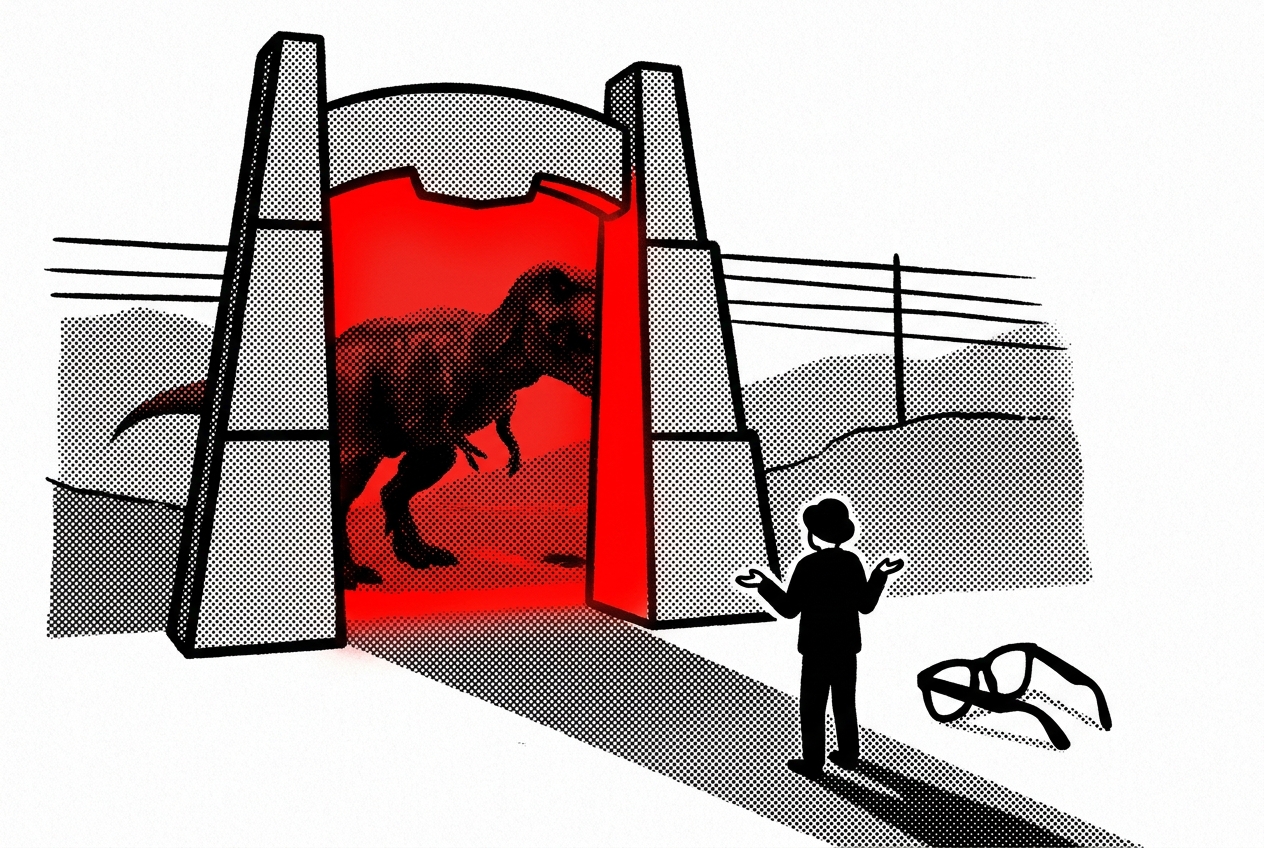
Simon Willison argues that computer scientists dismissing LLMs resemble skeptical geneticists shrugging at an open Jurassic Park. The analogy: the frog DNA critique misses that the park is already running.
Simon Willison, writing on his personal weblog on 18 September 2026, frames LLM skepticism as professional malpractice by analogy. A computer scientist who refuses to engage with large language models is, in his framing, like a geneticist who looks at Jurassic Park and complains about frog DNA while people are being eaten.
The analogy carries a specific critique. The skeptical geneticist is technically correct on the narrow point and entirely wrong on the operational one. The park is open. The consequences are live. Debating the substrate misses the story.
Simon Willison's Weblog is a practitioner-facing technical publication. The note is brief by design, but the argument it makes is pointed at a professional audience that has the standing to engage and is choosing not to. What to watch: whether this framing lands as a call to action inside the computer science community, or simply marks the moment when sitting out became indefensible.
Analysis
Capability skepticism and outcome indifference are not the same posture. The practitioners who refuse to engage are not staying neutral; they are ceding the field to those who will.
Research this with your AI
Copy the research prompt into your AI assistant to see how this story affects you.
Show the prompt
I just read this AI news story and want to understand it in my own context.

Title: Willison: Ignoring LLMs Is Like Ignoring Jurassic Park
Summary: Simon Willison argues that computer scientists dismissing LLMs resemble skeptical geneticists shrugging at an open Jurassic Park. The analogy: the frog DNA critique misses that the park is already running.
Category: Industry
Source: Simon Willison's Weblog, https://simonwillison.net/2026/Sep/18/probably-gonna-eat-you/

Using my own history and context, help me understand:
1. What is the core development and why does it matter?
2. Who are the major players involved and what are their motivations?
3. How does this fit into the broader AI landscape right now?
4. How does this apply to my own work, and what should I do or watch next?

Be specific and plain spoken.
Newsletter
The day's AI stories, with the editor's take, in one email.
Free. Unsubscribe in one click.